OpenCrabs AI Agent is a new kind of chatbot that you can run on your own computer or server. It learns from the conversations it has, fixes itself when something goes wrong, and can be used in many different ways. In this article we’ll explain what it is, how it works, and why it might be useful for you or your business.
What Is OpenCrabs AI Agent?
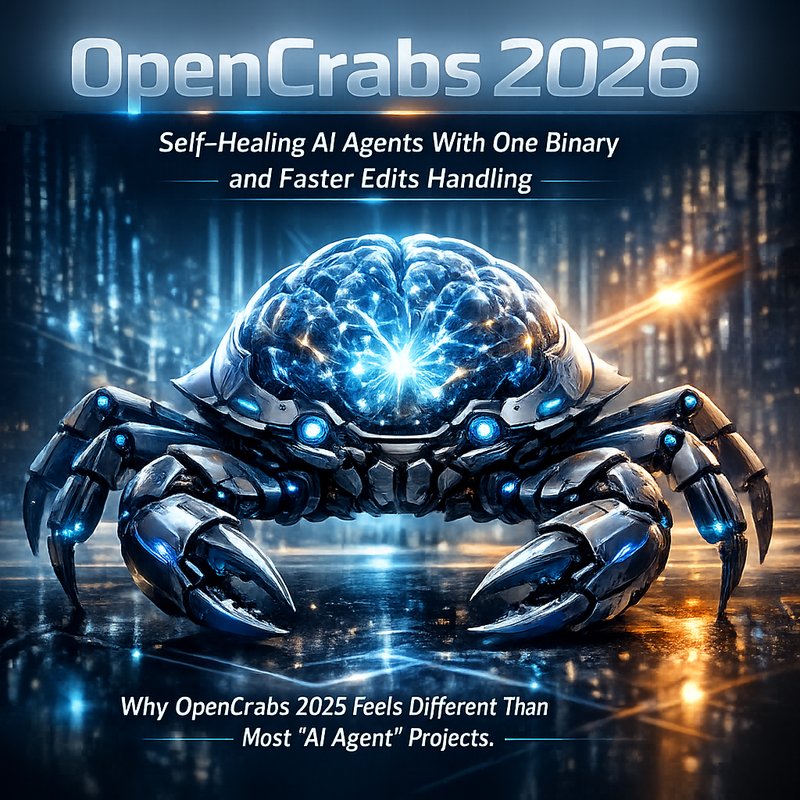
OpenCrabs is a self‑hosted AI agent written in Rust. It is designed to be simple to install, easy to customize, and safe to run on your own hardware. Unlike many cloud‑based chatbots, OpenCrabs keeps all data on your machine, so you have full control over privacy and cost.
Key Ideas Behind OpenCrabs
- Self‑Hosted – You run it locally, so no data leaves your network.
- Self‑Learning – The agent can add new knowledge from conversations and improve over time.
- Self‑Healing – If a part of the system fails, OpenCrabs can recover automatically without manual help.
These three ideas make OpenCrabs a powerful tool for developers, small teams, and anyone who wants a private AI assistant.
Core Features of OpenCrabs AI Agent
OpenCrabs has many features that make it stand out. Below we list the most important ones and explain how they help you.
1. Multi‑Profile Support
You can create several isolated profiles from a single installation. Each profile has its own configuration, memory, and sessions. This is handy if you want separate bots for different projects or teams.
- Create a profile:
opencrabs profile create <name> - Switch to a profile:
opencrabs -p <name>or set theOPENCRABS_PROFILEenvironment variable.
2. Profile Migration, Export, and Import
If you need to move a profile from one machine to another, OpenCrabs lets you export it as a .tar.gz file and import it later. You can also migrate a profile’s data from the default profile to a new one.
3. Token‑Lock Isolation
When multiple bots use the same API token (for example, a Discord bot token), OpenCrabs prevents them from conflicting. It uses PID‑based lock files to avoid two bots from trying to use the same token at the same time.
4. Profile‑Aware Daemon Services
OpenCrabs can run as a background service (daemon) for each profile. The service names are automatically generated, so you can run several bots simultaneously without interference.
5. Improved CLI Stream Handling
The command‑line interface (CLI) now waits longer before timing out. This change fixes issues where long-running tools would cause the session to restart unexpectedly.
6. Accurate Usage Tracking
OpenCrabs now merges model names with their versions, so your usage statistics are accurate and not inflated by duplicate entries.
7. Better Error Reporting
The agent now shows clear notifications for configuration errors, provider failures, and database corruption. This makes troubleshooting easier.
How to Install and Run OpenCrabs
Getting OpenCrabs up and running is straightforward. Follow these steps:
1. System Requirements
- Linux, macOS, or Windows (WSL)
- Rust toolchain (or pre‑compiled binaries)
- At least 4 GB RAM for the agent and the LLM you choose
2. Download
# Using Cargo
cargo install opencrabs

# Or download a pre‑compiled binary from GitHub releases
wget https://github.com/adolfousier/opencrabs/releases/download/v0.2.94/opencrabs-0.2.94-x86_64-unknown-linux-gnu.tar.gz
tar -xzf opencrabs-0.2.94-x86_64-unknown-linux-gnu.tar.gz
3. Configure
OpenCrabs uses a config.toml file. The default file is created in ~/.opencrabs. Edit it to set your preferred LLM provider, API keys, and other options.
[provider]
name = "openai"
api_key = "sk-..."

[agent]
name = "MyBot"
4. Run as a Service
opencrabs -p myprofile service install
This creates a systemd or launchd service that starts automatically on boot.
5. Using Profiles
# Create a new profile
opencrabs profile create dev

# Switch to it
opencrabs -p dev

# Export the profile
opencrabs profile export dev

# Import it elsewhere
opencrabs profile import /path/to/dev.tar.gz
Real‑World Use Cases
OpenCrabs can be used in many scenarios. Below are a few examples that show its flexibility.
Customer Support Bot
A small e‑commerce store can run OpenCrabs on its own server to answer common questions. Because the bot is self‑hosted, the store keeps all customer data private.
Internal Knowledge Base
A team can set up OpenCrabs to answer questions about company policies, coding standards, or product specs. The bot learns from new documents and updates its knowledge automatically.
Automation of Repetitive Tasks
OpenCrabs can run scripts, fetch data from APIs, or post updates to Slack and Discord. Its self‑healing feature means it will recover if a script fails.
Example: A Local Bakery
A bakery owner uses OpenCrabs to manage orders, answer FAQs about ingredients, and post daily specials on Instagram. The bot learns new recipes from the owner’s notes and can even suggest menu changes based on customer feedback.
Comparing OpenCrabs to Other AI Agents
| Feature | OpenCrabs | Cloud‑Based Chatbot (e.g., ChatGPT) |
|---|---|---|
| Hosting | Local | Cloud |
| Privacy | Full control | Data stored in cloud |
| Cost | One‑time hardware cost | Ongoing API usage fees |
| Customization | Full code access | Limited |
| Self‑Healing | Built‑in | Depends on provider |
| Learning | Self‑learning from conversations | Limited to provider updates |
OpenCrabs gives you the freedom to keep data on your own servers, which is especially useful for businesses that handle sensitive information.
Community and Ecosystem
OpenCrabs is open source and hosted on GitHub. The community can contribute new features, bug fixes, and plugins. Many developers already use it to build custom chatbots for Discord, Telegram, and Slack.
If you want to see how OpenCrabs can fit into a larger workflow, check out the Neura AI product suite at https://meetneura.ai. Neura AI offers tools that can integrate with OpenCrabs for advanced automation and data analysis.
Future Roadmap
The OpenCrabs team is actively working on new features:
- Enhanced Plugin System – Allow third‑party developers to add new tools easily.
- Improved UI – A web dashboard for monitoring bot health.
- Cross‑Platform Support – Native Windows binaries and better WSL integration.
- Advanced Self‑Learning – More sophisticated methods for generating synthetic training data.
These updates will make OpenCrabs even more powerful and easier to use.
Conclusion
OpenCrabs AI Agent is a powerful, self‑hosted chatbot that learns and heals itself. It gives you full control over data, reduces ongoing costs, and can be customized for many different tasks. Whether you’re a developer, a small business owner, or a tech enthusiast, OpenCrabs offers a flexible solution for building private AI assistants.
Try it today and see how a self‑hosted AI agent can transform your workflow.