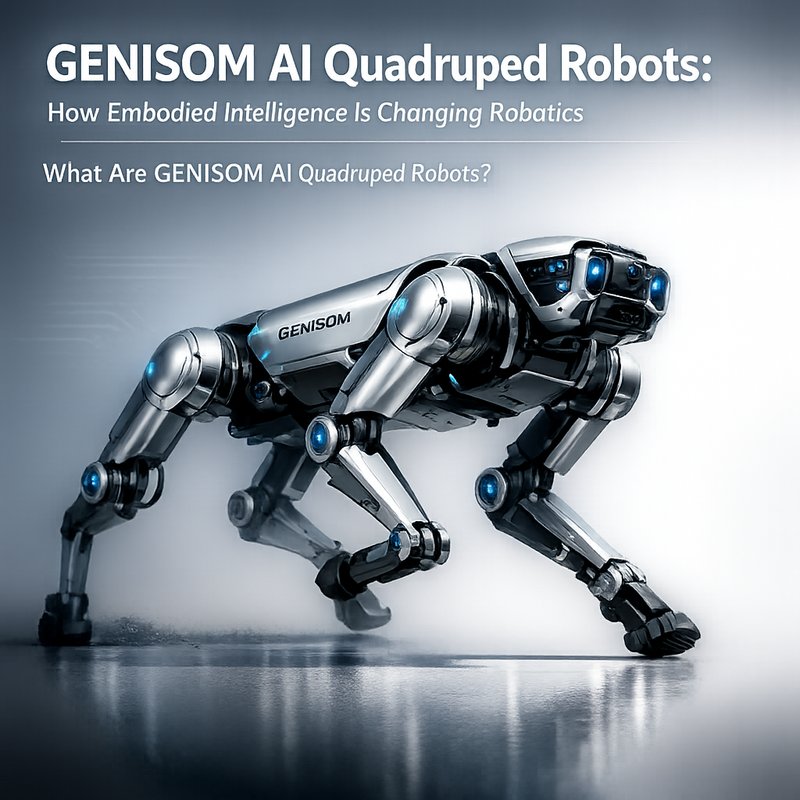
GENISOM AI quadruped robots are a new type of robot that can walk, run, and do tasks on four legs. They use a special kind of artificial intelligence that learns from the world around them. This article explains what these robots are, how they work, and why they matter for the future of technology.
What Are GENISOM AI Quadruped Robots?
GENISOM AI quadruped robots are machines that look like small dogs or other four‑legged animals. They can move on uneven ground, climb stairs, and carry objects. The key feature is their embodied intelligence – the AI is built into the robot’s body, not just in a computer. This means the robot can sense its environment, decide what to do, and act right away.
The name GENISOM comes from a company that started in 2024. They built a system that lets robots learn from real‑world experiences. The system is called an Embodied Intelligence System. It includes software that runs on the robot’s hardware and a set of tools that let developers write new tasks for the robot.
Why “Embodied Intelligence”?
Traditional robots use a computer that sits in a box. The robot’s body is just a set of motors and sensors that the computer tells to move. In contrast, embodied intelligence means the robot’s brain is part of the body. The sensors, motors, and AI all work together in real time. This makes the robot more flexible and able to handle unexpected situations.
How Do They Learn?
GENISOM AI quadruped robots learn by watching and trying. They use cameras, microphones, and touch sensors to gather data. The AI processes this data and updates its own rules. For example, if the robot sees a step, it can figure out how to step over it. If it bumps into something, it can adjust its path.
The learning process is called self‑adaptation. The robot can change its behavior without a human telling it what to do. This is similar to how animals learn from experience.
The Technology Behind GENISOM AI Quadruped Robots
Sensors and Actuators
The robot has many sensors:
- Cameras for vision
- Microphones for sound
- Touch sensors on the feet
- Gyroscopes to keep balance
Actuators are the motors that move the legs. They are controlled by the AI so the robot can walk, run, or pick up objects.
The AI Core
The AI core is a small computer that runs a special program. It uses a type of machine learning called reinforcement learning. This means the robot gets rewards for doing good things, like staying upright, and penalties for bad things, like falling.
The AI core also has a memory that stores past experiences. When the robot faces a new situation, it can look back at similar past events and decide what to do.
Software Stack
GENISOM AI provides a software stack that developers can use. The stack includes:
- A robot operating system (ROS) that handles communication between sensors and motors.
- A learning framework that lets developers train the robot on new tasks.
- A simulation environment that lets developers test the robot in a virtual world before using it in real life.
The software stack is open source, so anyone can build on it.
Real‑World Applications
Search and Rescue
In disaster zones, GENISOM AI quadruped robots can move through rubble and find survivors. Their four‑legged design lets them navigate uneven ground better than wheeled robots. The AI can recognize signs of life, like heat or sound, and alert human teams.
Agriculture
Farmers can use these robots to monitor crops. The robot can walk through fields, take pictures, and detect pests or disease. Because it can learn new tasks, it can adapt to different crops and seasons.
Delivery Services
Some companies are testing robot delivery in cities. A GENISOM AI quadruped robot can carry packages and navigate sidewalks. The AI can avoid obstacles and find the fastest route.
Entertainment
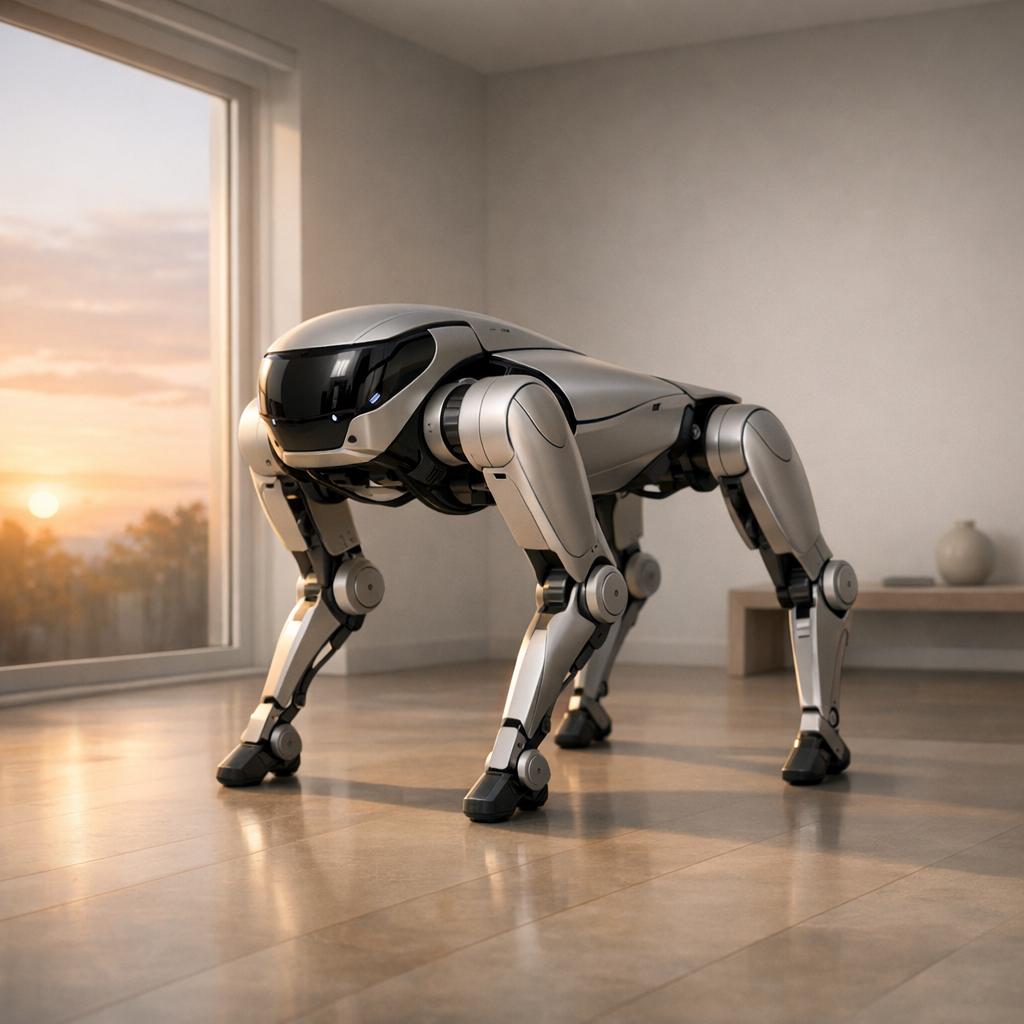
The robots can also be used in theme parks or museums. They can perform tricks, interact with visitors, and provide educational experiences about robotics.
How to Get Started with GENISOM AI Quadruped Robots
If you want to try out these robots, here are the steps:
- Visit the GENISOM AI website to download the software and read the documentation.
- Build or buy a robot kit. GENISOM offers kits that include the body, motors, and sensors.
- Install the software stack on the robot’s computer. Follow the guide on the website.
- Train the robot on a simple task, like walking forward. Use the simulation environment first.
- Deploy the robot in a real environment and watch it learn.
You can also join the GENISOM AI community on GitHub to share projects and ask questions.
Comparison with Other Quadruped Robots
There are several other quadruped robots on the market. Here’s how GENISOM AI quadruped robots compare:
| Feature | GENISOM AI | Boston Dynamics Spot | ANYbotics ANYmal |
|---|---|---|---|
| Embodied AI | Yes | No | Yes |
| Open Source | Yes | No | Yes |
| Learning Capability | Self‑adaptation | Pre‑programmed | Self‑adaptation |
| Cost | $10,000–$15,000 | $75,000 | $50,000 |
| Use Cases | Search, agriculture, delivery | Inspection, research | Inspection, research |
GENISOM AI quadruped robots stand out because they combine open source software with a learning system that can adapt on its own.
Challenges and Future Directions
Battery Life
One challenge is battery life. Quadruped robots need enough power to move for long periods. GENISOM AI is working on better batteries and power management.
Safety
Safety is important, especially when robots work near people. The AI must detect humans and stop if it gets too close. GENISOM AI is adding more sensors and safety protocols.
More Complex Tasks
Future versions will let robots do more complex tasks, like opening doors or using tools. The learning system will need to handle more variables.
Collaboration with Other Robots
Another exciting direction is having multiple robots work together. GENISOM AI is exploring ways for robots to share information and coordinate tasks.
How GENISOM AI Quadruped Robots Fit Into the Bigger Picture
The rise of embodied intelligence is part of a larger trend in robotics. More companies are building robots that can learn and adapt. This trend is driven by:
- Better sensors that give robots more information.
- Smaller, faster computers that can run AI in real time.
- Open source communities that share code and ideas.
GENISOM AI quadruped robots are a good example of how these trends come together. They show that robots can be useful in many everyday situations.
Conclusion
GENISOM AI quadruped robots are a new type of robot that uses embodied intelligence to learn and adapt. They can walk, run, and do tasks on four legs. Their open source software and learning system make them a powerful tool for many industries. As battery life improves and safety features grow, these robots will become even more useful.
If you want to learn more about how to build or use GENISOM AI quadruped robots, check out the official website and community resources. The future of robotics is here, and it is walking on four legs.