Hybrid Attention Architecture is a new way that large language models (LLMs) can look at a huge amount of text at once. In this article we break down how it works, why it matters, and what it means for developers who want to build smarter AI tools. We’ll also look at the 1 million‑token context window that comes with this architecture and how it can change the way we write code, generate content, and build chatbots.
What is Hybrid Attention Architecture?
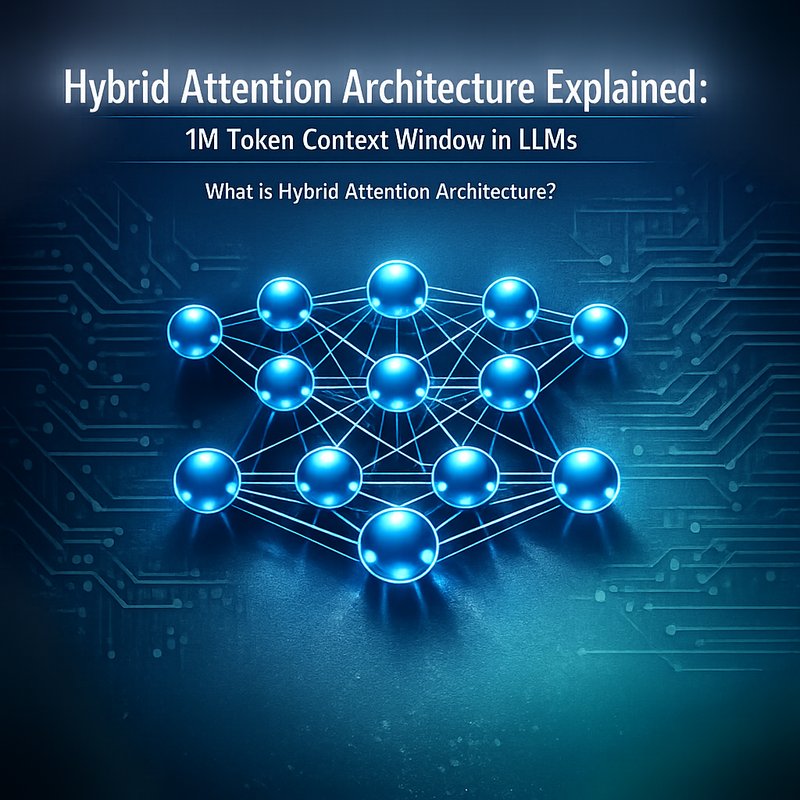
Hybrid Attention Architecture is a mix of two attention methods that let a model focus on important parts of a long document while ignoring the rest. Traditional attention looks at every word in a text, which becomes slow and memory‑heavy when the text is very long. Hybrid Attention splits the work: it uses a fast, low‑cost method for most of the text and a precise, high‑cost method for the most relevant sections. This saves memory and speeds up processing.
The key idea is that not every word matters equally. By giving the model a “shortcut” to skip over less important parts, Hybrid Attention Architecture can handle a 1 million‑token context window without using 90 % less key‑value cache. That means the model can remember a whole book, a long conversation, or a large codebase in one go.
How Does It Work?
- Token Chunking – The input text is split into chunks (e.g., 512 tokens each).
- Fast Attention – A lightweight attention layer quickly scores each chunk to find the most relevant ones.
- Selective Deep Attention – Only the top chunks get processed by a heavier, more accurate attention layer.
- Merge Results – The outputs from both layers are combined to produce the final answer.
Because the heavy attention is applied only to a few chunks, the model uses far fewer key‑value pairs. That’s why the KV cache usage drops by 90 % compared to pure attention.
Why 1 Million Tokens?
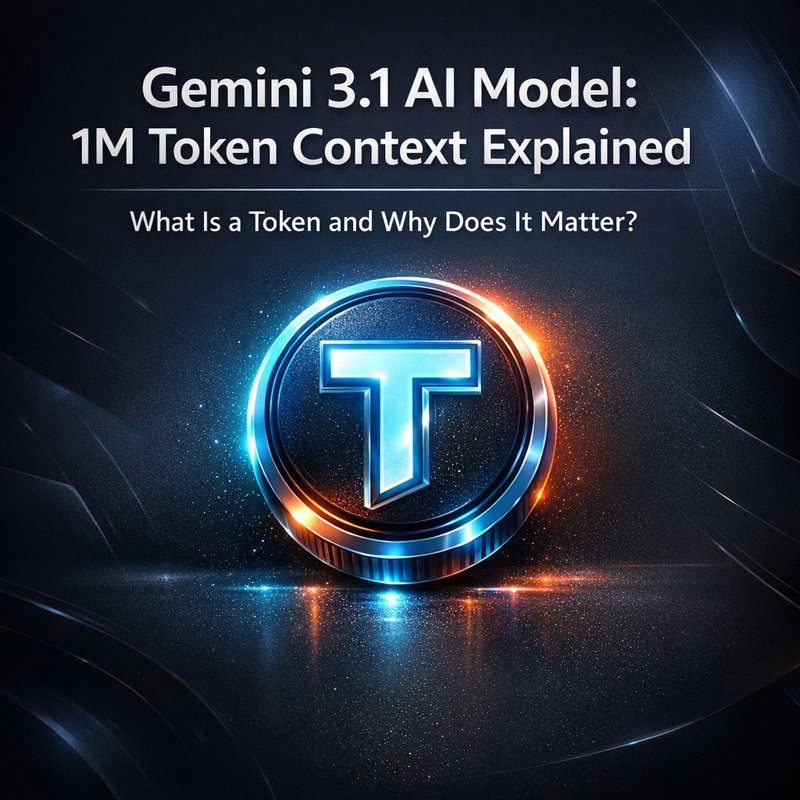
A 1 million‑token window is huge. For context, a typical novel has about 100 000 tokens. With Hybrid Attention Architecture, a single prompt can include ten novels, a full technical manual, or a large code repository. This opens up new possibilities for:
- Long‑form content creation – Writers can feed entire outlines and get consistent, coherent chapters.
- Code generation – Developers can paste an entire codebase and ask the model to refactor or add features.
- Chatbots – Customer support bots can remember a whole conversation history without losing context.
Real‑World Use Cases
1. Writing Long Articles
Imagine you’re a journalist writing a 10,000‑word feature. With a 1 million‑token window, you can feed the entire research, interviews, and drafts into the model. The model can then suggest edits, add transitions, and even generate a summary—all while keeping track of every detail.
2. Code Refactoring
A software team can paste a large repository into the model and ask it to refactor a specific module. Because the model sees the whole codebase, it can understand dependencies and avoid breaking other parts. This reduces the risk of bugs and speeds up development.
3. Customer Support
A support bot can load a customer’s entire interaction history, product manuals, and FAQs. When a new question arrives, the bot can pull in the relevant context and give a precise answer, improving satisfaction and reducing human workload.
Hybrid Attention vs. Traditional Attention

| Feature | Traditional Attention | Hybrid Attention |
|---|---|---|
| Memory usage | High (linear with tokens) | Low (only top chunks) |
| Speed | Slower for long texts | Faster for long texts |
| Accuracy | Consistent | Slightly lower on ignored chunks |
| Use case | Short prompts | Long documents, codebases |
Hybrid Attention Architecture is not a silver bullet. It trades a tiny bit of accuracy for huge gains in speed and memory. For most practical applications, the trade‑off is worth it.
How to Use Hybrid Attention Models
If you want to experiment with Hybrid Attention, you can start with open‑source models that support it. One popular option is the new Mistral AI release, which is available under the Apache 2.0 license and includes configurable reasoning effort. You can also look at the open‑source OpenCrabs AI agent, which is self‑hosted and self‑learning. Both projects provide APIs that let you load a model with a 1 million‑token window.
Step‑by‑Step Guide
- Choose a Model – Pick a model that supports Hybrid Attention (e.g., Mistral or a custom build).
- Set the Context Window – Configure the model to accept up to 1 million tokens.
- Chunk Your Input – Break your text into manageable chunks (512 tokens each).
- Run the Model – Send the chunks to the model and let it process them.
- Collect the Output – Merge the results and use them in your application.
You can find more detailed tutorials on the Neura AI blog, where we cover how to integrate these models into your workflow. Check out the Neura AI product page for tools that help you manage large contexts.
Challenges and Future Directions
While Hybrid Attention Architecture is powerful, it still faces challenges:
- Chunk Boundary Issues – Splitting text can break sentences or code lines. Careful preprocessing is needed.
- Model Training – Models must be trained to understand the hybrid scheme, which can be resource‑intensive.
- Fine‑Tuning – Customizing the model for specific domains (legal, medical) requires additional data.
Researchers are working on better chunking strategies and dynamic attention that adapts to the content. The next generation of LLMs may combine Hybrid Attention with other techniques like sparse attention or retrieval‑augmented generation.
Takeaway
Hybrid Attention Architecture is a game‑changing approach that lets large language models handle a 1 million‑token context window efficiently. By mixing fast and deep attention, it reduces memory usage by 90 % and speeds up processing. This opens up new possibilities for long‑form writing, code generation, and customer support. If you’re building AI tools that need to remember a lot of information, Hybrid Attention is a technology worth exploring.
Additional Resources
- OpenCrabs AI Agent – Self‑hosted, self‑learning, self‑healing bot.
- Mistral AI – Apache 2.0 licensed model with configurable reasoning.
- Neura AI Blog – Case studies and tutorials on large‑context models.
- Cursor Composer 2 – 37 % performance boost on coding benchmarks.