Open source ai agents are changing how people build tools that think and act for them.
These agents run on your own machines or in small clouds.
They can do tasks, call tools, and fix themselves in some cases.
In this article I will explain what open source ai agents are, why they matter, and how teams can use them safely today.
What are open source ai agents?
Open source ai agents are software projects that let a model act like a helper.
They come with code you can read, change, and run yourself.
They usually combine a language model with tool calls, memory, and workflows.
Some of them run from a single binary, some use browser tools, and others plug into many APIs.
You may have heard of projects like OpenCrabs, OpenClaw, and Hermes.
OpenCrabs is a single binary agent that can improve itself and fix bugs.
OpenClaw is a popular agent project with a large open source community.
Hermes is an agent built for high throughput and has been growing fast in token usage.
These projects show how open source ai agents are moving from experiments to real tools people use every day.
Why the phrase open source ai agents matters
Open source ai agents matters because it tells the reader the article is about tools you can run and inspect yourself.
When you run open source ai agents you avoid handing everything to a single cloud company.
You also get more control over how your data moves and how tools are linked.
Open source ai agents give teams a chance to build smart helpers that match their workflows.
They can connect to internal systems, run checks on code, and automate repetitive tasks.
Big themes right now
There are several trends shaping open source ai agents today.
-
Better local tooling and single binary agents.
Projects like OpenCrabs aim to be easy to install and run on a developer laptop or a VPS. -
More provider and model options.
New agents support cloud APIs and local models, and they can switch between them. -
Security and supply chain checks.
Open source projects are adding audits and safety checks so tools do not leak secrets or take unsafe actions. -
High volume agents for hosts and servers.
Hermes and other projects are built to handle huge numbers of tokens per day for many users. -
Hybrid memory and embedding options.
Agents can use local search indexes, vector stores, or remote embeddings depending on cost and speed.
These trends make open source ai agents practical for teams that need control and low cost.
Real world examples
Here are quick notes on a few projects in the news.
-
OpenCrabs: A self healing, single binary agent written in Rust.
It focuses on offline use, local memory modes, and OAuth flows for some providers.
See the project on GitHub at https://github.com/adolfousier/opencrabs for details. -
OpenClaw: A widely used open source agent with a big community and lots of stars.
It also has some security scrutiny, which is normal for a popular tool.
There are public demos and channels on YouTube and other platforms. -
Hermes Agent: Pushed higher token throughput and now handles major daily loads, according to reporting.
Hermes shows that open source agents can scale for real production use. -
Google model updates: At events like Google I/O, new models such as Gemini 4 and low-cost flash models are announced.
Those models change the choices teams have when they pick a model provider.
These examples show that both community projects and big vendors are pushing the space forward.
How teams choose the right open source ai agents
Picking an agent involves asking simple questions.
-
Where will the agent run?
On a laptop, VPS, or company cloud? -
What models will it use?
Local GGUF models, API models from Google or OpenAI, or mixed options? -
What data must stay private?
If user data cannot leave the network, local-only or private-hosted models are needed. -
Do you need self-healing or automatic updates?
Self-healing agents are more complex but can reduce maintenance over time. -
What tools must the agent call?
If it must open tickets, run CI, or access internal services, tool integrations are essential.
Answering these questions helps teams pick an agent that matches their constraints.
Security basics for running open source ai agents
Open source code is helpful because you can inspect what runs.
But that does not remove the need for careful security work. Here are practical steps.
-
Isolate credentials.
Never store API keys in public code. Use secure vaults or environment variables. -
Audit network calls.
Watch what external services the agent contacts.
Tools and wrappers can block unexpected outbound traffic. -
Use least privilege.
Give the agent the minimum permissions it needs to do its job. -
Monitor for token leaks.
Scan logs and config files for accidental keys. -
Vet third party plugins.
Encourage internal reviews before installing community plugins. -
Test failure modes.
Simulate provider outages and see how the agent behaves.
These steps help protect both data and the infrastructure the agent touches.
Architecture patterns for open source ai agents
Most agents share a few common pieces.
-
Orchestrator.
This part decides what the agent should do next and when to call tools. -
Model layer.
This is the connection to the language model, either via a local runtime or an API. -
Tool adapters.
Small modules that let the agent call email, web, or internal systems. -
Memory store.
Databases or vector stores that keep past interactions and search context. -
Observability.
Logging, metrics, and debugging features that help you see what the agent is doing.
A robust agent design separates these pieces so you can swap models or tools without rewriting the whole project.
Example system: local-first agent
One useful pattern is local-first agents.
They try to do work using only local models and resources.
If the agent needs a cloud feature, it prompts the user and uses an approved API flow.
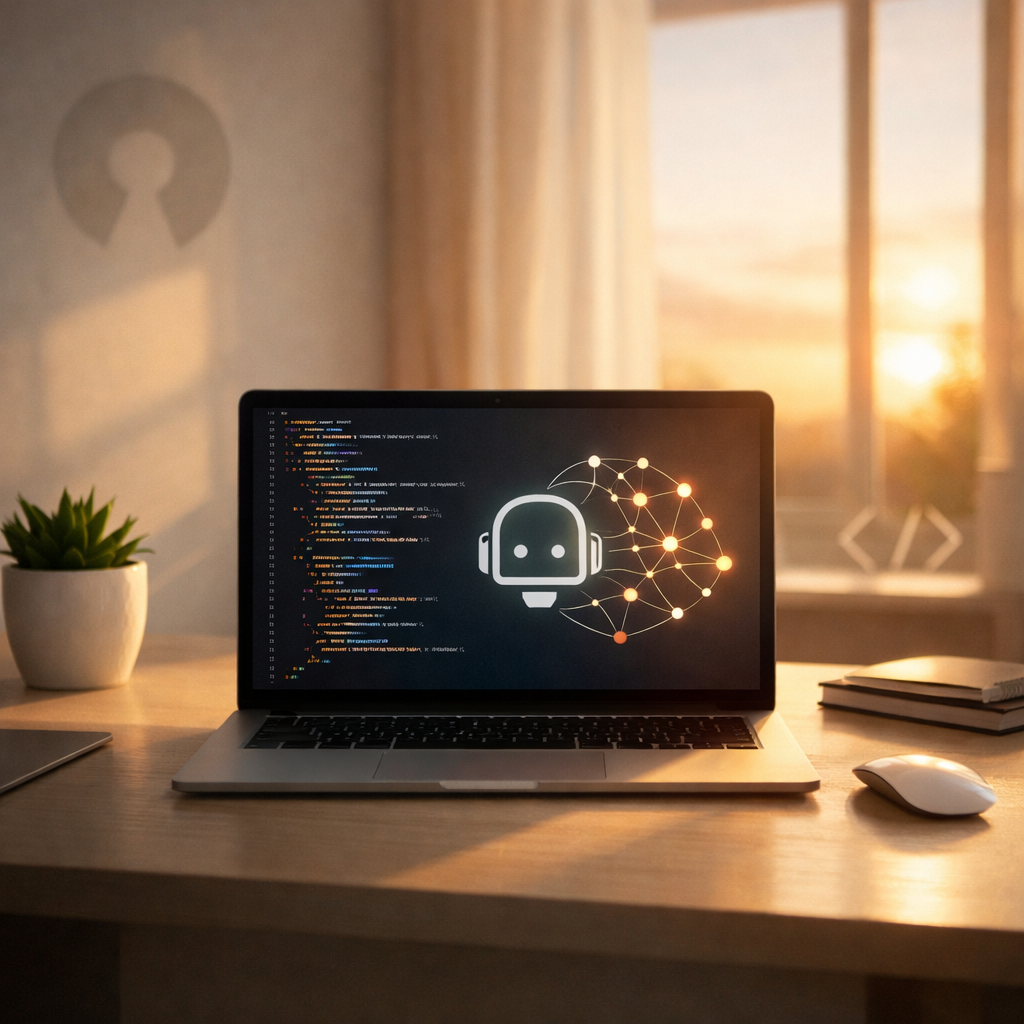
This pattern reduces cost and keeps sensitive data local.
OpenCrabs has modes that skip large model downloads and use keyword search only, which is helpful for low RAM machines.
Cost and performance trade offs
You have options and each has trade offs.
-
Local models.
Lower recurring cost but you need hardware and storage.
Some GGUF models are hundreds of megabytes to a few gigabytes. -
Cloud APIs.
Fast to start and often more powerful.
But they can be expensive when you run many tokens per day. -
Hybrid approaches.
Use local models for cheap tasks and cloud models for hard reasoning steps.
Hermes and OpenClaw show that agents can scale token usage, so cost planning becomes critical. Use quotas and routing logic to manage spend.
Developer experience tips
A good developer experience helps teams adopt an agent.
-
Simple onboarding.
Make a single script or binary to set up the agent. -
Clear config.
Use plain files with comments and examples. -
Reproducible builds.
Use container images or single binaries to avoid install debugging. -
Test suites.
Include tests for tool calls and critical logic paths. -
Helpful defaults.
Sensible defaults let new users try the agent without deep setup.
OpenCrabs aims to be a single binary for easy setup. Neura ACE also focuses on automating content tasks if you need an end to end content flow. You can learn more at https://meetneura.ai and see product details at https://meetneura.ai/products.
Integrating open source ai agents with internal tools
Connecting an agent to your systems requires adapters and clear interfaces.
-
Use REST or gRPC adapters.
Wrap internal services so the agent calls a small, stable API. -
Provide sandbox endpoints.
Let agents run in a test mode before they touch production. -
Build plugin registries.
Register tool adapters so the agent finds them at runtime. -
Protect access with tokens and short lived keys.
Rotate keys and require approvals for new adapters.
Neura Router can help teams connect many models with a single API. Check https://router.meetneura.ai for a view of multi-provider routing.
Observability and debugging strategies
Agents can be unpredictable. Observability helps you trust them.
-
Structured logs with tracing.
Include the agent step id and tool names in logs. -
Record tool calls.
Keep a history of external calls and results for audit. -
Human in the loop.
For risky actions, require a human review step. -
Replay capability.
Save inputs and model outputs so you can replay flows during debugging. -
Use test prompts.
Include golden prompts and expected outputs to detect regressions.
Truelens is a tool that helps with agent debugging and traces. It now supports grounded tool calls for better workflows. You can explore more at Truelens documentation.
Common pitfalls and how to avoid them
Here are common mistakes teams make and how to avoid them.
-
Treating the agent like a finished product.
Agents need monitoring and regular maintenance. -
Giving broad permissions early.
Start small and expand permissions after testing. -
Ignoring cost controls.
Set rate limits and budget alerts. -
Trusting outputs without checks.
Validate critical actions with independent checks. -
Not planning for fallback.
If a model or provider fails, routes must exist to keep core functions running.
If you plan for these issues early you will save time and limit surprises.
Where open source ai agents are headed
Expect more modular designs, better safety tools, and richer local runtimes.
Big model providers will keep releasing new models and cheaper inference options.
Local projects will add easier ways to use cloud features safely.
Open source ai agents will let small teams run smart helpers without large vendor lock in.
They will also push platform teams to build safer and clearer integration points.
How to start today
If you want to experiment, here is a simple plan.
-
Pick a test case.
Choose a small, useful task like automating a report or triaging emails. -
Pick an agent project.
Try a lightweight one like OpenCrabs for local use or OpenClaw for a large plugin ecosystem. -
Set safe permissions.
Use a sandbox account and isolated data. -
Run tests and capture logs.
Make sure you can replay failing flows. -
Gradually expand.
Add more tools and users once you are comfortable.
If you want content automation specifically, Neura ACE can automate content workflows and connect to many tools. See https://ace.meetneura.ai for more on content agents.
Closing thoughts
Open source ai agents give teams new freedom to build helpers that fit their needs.
They are not a magic fix.
They need careful setup, limits, and monitoring.
But when done right, they can save time and make workflows much smarter.
If you want to try an agent that runs locally, check projects like OpenCrabs on GitHub at https://github.com/adolfousier/opencrabs.
If you want to learn about agent observability, look at Truelens.
If you want to explore product-grade content automation, visit https://meetneura.ai and our products section at https://meetneura.ai/products.