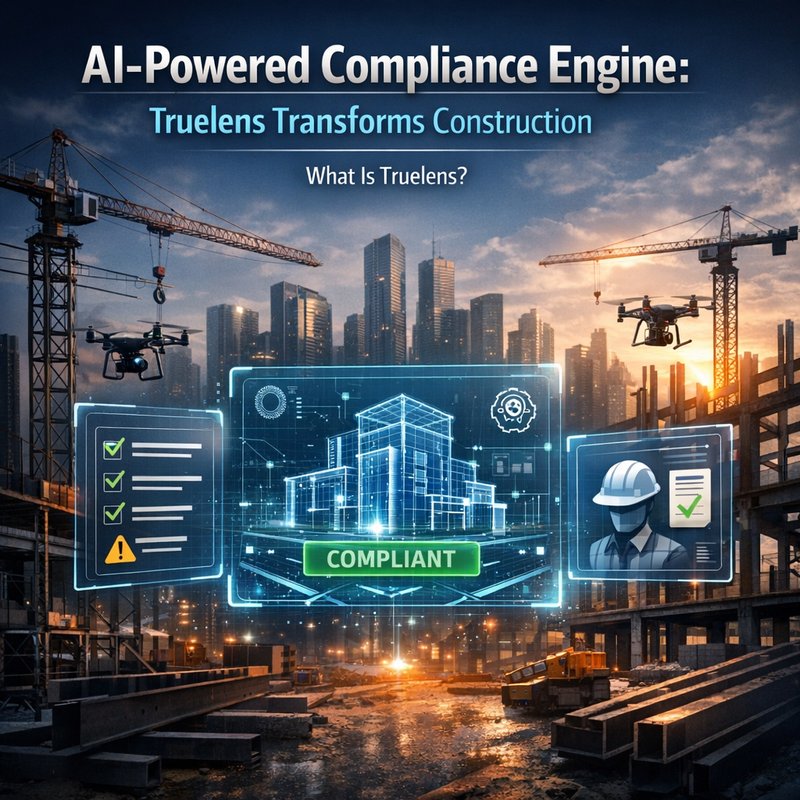
Truelens is a new tool that helps construction teams stay on top of safety rules and building codes. It uses artificial intelligence to read plans, spot problems, and give instant feedback. The result is fewer mistakes, faster approvals, and safer sites. In this article we’ll look at how Truelens works, why it matters, and what it can do for contractors, architects, and inspectors.
What Is Truelens?
Truelens is an AI‑powered compliance engine built for the construction industry. It scans design drawings, specifications, and calculations and checks them against the UK Building Regulations. The engine can also review on‑site photos and sensor data to make sure the work matches the plans. Truelens was launched on May 15, 2026 and has already been adopted by several large UK firms.
The engine is not just a checklist. It learns from every project it sees. If a new rule is added to the Building Regulations, Truelens updates its knowledge automatically. It also remembers past mistakes and suggests better ways to avoid them in future projects.
Why Compliance Matters in Construction
Construction projects involve many people, heavy equipment, and large amounts of money. A single oversight can lead to costly delays, legal problems, or even injuries. In the UK, the Building Regulations set strict standards for safety, energy efficiency, and accessibility. Contractors must prove that every part of a building meets these rules before it can be occupied.
Traditionally, compliance checks are done by human inspectors who review drawings and visit sites. This process can take weeks and is prone to human error. Truelens speeds up the process by automating the review and providing clear, actionable reports.
How Truelens Works
Data Collection
Truelens pulls data from multiple sources. It can read PDF drawings, CAD files, and spreadsheets. It also connects to cameras and sensors on the construction site. All of this data is fed into the engine for analysis.
AI Analysis
The core of Truelens is an AI model that has been trained on thousands of building projects. It looks for patterns that match the Building Regulations. For example, it checks that stair treads are the correct height, that fire exits are accessible, and that structural loads are within limits. If it finds a mismatch, it flags the issue and explains why it matters.
Real‑Time Alerts
When Truelens spots a problem, it sends an alert to the project team. The alert includes a short description, the location on the drawing, and a suggested fix. Because the alerts are delivered instantly, teams can correct mistakes before they become costly.
Integration with UK Building Regulations
Truelens is built to understand the UK Building Regulations in detail. It knows the latest updates and can automatically adjust its checks. For example, if a new energy‑efficiency requirement is added, Truelens will start checking every window and roof for compliance. This keeps projects up to date without manual intervention.
The engine also produces a compliance report that can be shared with regulators. The report is formatted in a way that inspectors can read quickly, reducing the time needed for site visits.
Benefits for Stakeholders

For Contractors
Contractors get a clear view of where a project stands. They can see which parts of the design are compliant and which need changes. This reduces the risk of costly rework and helps keep the project on schedule.
For Architects
Architects can use Truelens to test their designs before they are built. The engine can point out potential regulatory issues early, allowing architects to tweak plans and avoid costly changes later.
For Inspectors
Inspectors can rely on Truelens reports to focus their time on the most critical areas. The engine does the heavy lifting, so inspectors can spend more time on safety checks that require human judgment.
Case Study: A UK Construction Firm
A mid‑size construction company in Manchester adopted Truelens for a new office building. Before using the engine, the firm spent an average of 12 weeks on compliance checks. After implementation, the time dropped to 4 weeks. The firm also avoided a major safety violation that would have cost £200,000 in penalties. The project was completed on time and within budget.
The firm’s project manager said, “Truelens gave us confidence that we were meeting every rule. It saved us time and money, and most importantly, it made the site safer.”
Future of AI in Construction Compliance
Truelens is just the beginning. As AI models improve, we can expect even more sophisticated checks. Future versions may include:
- Predictive risk analysis that forecasts potential problems before they arise.
- Integration with BIM (Building Information Modeling) to provide real‑time compliance updates as designs evolve.
- Mobile alerts that let workers on the site see compliance issues on their phones.
These advances will make construction projects faster, cheaper, and safer.
Conclusion
Truelens shows how an AI‑powered compliance engine can change the construction industry. By automating the review of plans and on‑site data, it reduces errors, speeds up approvals, and keeps workers safe. For contractors, architects, and inspectors, Truelens is a powerful ally that keeps projects on track and compliant with the UK Building Regulations.
If you’re involved in construction, consider how an AI‑powered compliance engine could help your next project. For more details, visit the official Truelens page or explore similar tools on the Neura AI platform.
Article URL: https://blog.meetneura.ai/ai-powered-compliance-engine-truelens