Large language models (LLMs) like GPT‑4 or Claude have become the backbone of many AI tools. They learn from huge amounts of text, then answer questions, write code, or create art. But most of these models are static: once they are trained, their internal weights stay the same. If new information appears, the model can’t learn it on its own.
Enter self‑adapting LLMs. These models can update their own knowledge without needing a full retraining cycle. MIT’s SEAL (Self‑Adapting LLMs) framework shows how this can be done safely and efficiently. In this article we’ll break down what self‑adapting LLMs are, how SEAL works, why it matters, and what the future might hold.
What Are Self‑Adapting LLMs?
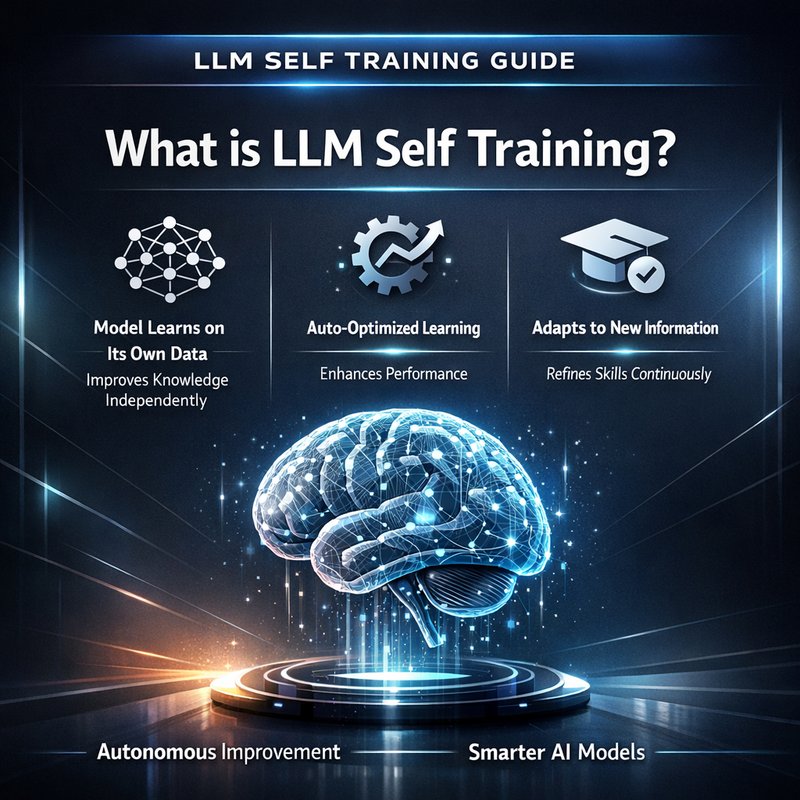
A self‑adapting LLM is a language model that can modify its own weights after it has been deployed. Think of it as a student who can learn from new books and then adjust their understanding without going back to school. The key idea is that the model can generate new training data for itself, fine‑tune on that data, and then apply the updated weights to future conversations.
Why Do We Need Self‑Adapting LLMs?
- Rapidly Changing Knowledge – The world changes fast. A model trained on 2023 data may give outdated answers in 2024.
- Personalization – Users want models that remember their preferences and adapt to their style.
- Safety and Bias Mitigation – If a model learns to produce harmful content, it can correct itself.
- Cost Efficiency – Full retraining is expensive. Small updates are cheaper and faster.
How SEAL Works: MIT’s Self‑Adapting LLM Framework
MIT researchers introduced SEAL to let LLMs self‑edit. The process has three main steps:
-
Self‑Generated Synthetic Data
The model is asked to create new training examples that reflect recent information or user feedback. For instance, if a user says, “I need the latest COVID‑19 guidelines,” the model writes a short paragraph summarizing the new guidelines. -
Self‑Edits and Validation
The synthetic data is then fed back into the model. The model checks its own output against a set of rules or a smaller verification model to ensure the new data is accurate and safe. -
Weight Update
Once the synthetic data passes validation, the model fine‑tunes on it. The updated weights are stored and used for future interactions.
This loop can run continuously, allowing the model to stay current without external retraining.
Technical Highlights
- Synthetic Data Quality – SEAL uses a “teacher‑student” approach: a smaller, more reliable model reviews the synthetic data it is used for training.
- Safety Filters – The framework includes built‑in checks for harmful or biased content.
- Efficiency – Fine‑tuning on a few hundred examples takes only minutes, compared to days for full training.
Benefits of Self‑Adapting LLMs
| Benefit | Explanation |
|---|---|
| Up‑to‑Date Knowledge | Models can incorporate new facts instantly. |
| Personalization | Each user can have a slightly different model that remembers past conversations. |
| Reduced Costs | Small updates are cheaper than full retraining. |
| Improved Safety | Models can correct mistakes on the fly. |
| Flexibility | Works with many base models (GPT‑4, Claude, etc.). |

Real‑World Example: Customer Support Bots
A company uses a self‑adapting LLM to power its help desk. When a new product feature is released, the bot automatically updates its knowledge base. Customers get accurate answers without the support team having to manually tweak the bot.
Challenges and Risks
While self‑adapting LLMs sound great, they come with hurdles:
- Data Quality – If the model generates incorrect synthetic data, it can reinforce errors.
- Security – Allowing a model to modify itself could be exploited if not properly sandboxed.
- Regulation – Some industries require strict audit trails; self‑updates may complicate compliance.
- Resource Management – Continuous fine‑tuning can consume GPU time and memory.
Researchers are actively working on safeguards, such as strict validation pipelines and audit logs.
Comparing Self‑Adapting LLMs to Traditional Fine‑Tuning
| Feature | Traditional Fine‑Tuning | Self‑Adapting LLMs |
|---|---|---|
| Update Frequency | Weeks to months | Minutes to hours |
| Human Intervention | High (data labeling, training) | Low (model generates data) |
| Cost | High (compute, storage) | Lower (small fine‑tunes) |
| Safety Controls | Manual review | Automated validation |
| Personalization | Limited | High (each user can have a unique model) |
Self‑adapting LLMs complement traditional methods. For critical applications, a hybrid approach—manual fine‑tuning for core knowledge and self‑updates for peripheral data—can be ideal.
Future Outlook
The field of self‑adapting LLMs is still young, but the trajectory is clear:
- Broader Adoption – More companies will integrate self‑update pipelines into their AI products.
- Standardized Toolkits – Open‑source libraries will make it easier to build self‑learning models.
- Regulatory Frameworks – Governments may create guidelines for self‑modifying AI to ensure transparency.
- Cross‑Model Compatibility – Frameworks like SEAL will support a variety of base models, from GPT‑4 to open‑source alternatives.
If you’re building AI tools, keeping an eye on self‑adapting LLMs will help you stay ahead of the curve.
Conclusion
Self‑adapting LLMs, exemplified by MIT’s SEAL framework, are a promising step toward AI that can learn and improve on its own. They offer faster updates, better personalization, and lower costs, while also presenting new safety and regulatory challenges. As the technology matures, we can expect to see more AI products that stay current without the heavy lifting of full retraining.
By understanding how self‑adapting LLMs work, developers and businesses can design smarter, safer, and more responsive AI systems. The future of AI is not just about bigger models, but about models that can adapt to the world around them.