If you like AI agents but hate the usual setup pain, OpenCrabs 2026 is the kind of project that feels refreshing. It’s a self-hosted AI agent that focuses on running reliably, handling weird chat flows, and fixing itself when things go off track. And lately, the updates have been very practical, like better Telegram edit settling, smoother restart behavior on Linux, and more reliable tool calling for different model formats.
In this guide, you’ll learn what makes OpenCrabs 2026 different, where the recent changes matter in real life, and how you can try it without losing an entire weekend to debugging.
Why OpenCrabs 2026 Feels Different Than Most “AI Agent” Projects
Most agent repos do one thing well and then you hit the next problem.
You run it once, it seems fine.
So you try it again tomorrow, or with a different model, and you suddenly deal with:
- tool calls being treated like plain text
- agent restarts failing after binary swaps
- Telegram messages arriving as partial edits
- language mismatch causing the agent to miss intents
- config defaults breaking onboarding on a fresh install
OpenCrabs 2026 tackles these as first-class problems, not “we’ll fix that later” items.
From the repository info, this is built as a self-hosted agent that can update itself, and it keeps working even when the environment gets messy.
You can check the project here:
- Repo: https://github.com/adolfousier/opencrabs
- Site: https://opencrabs.com
- Updates chatter: https://x.com/opencrabs
And if you’re the type who tracks reliability upgrades closely, the version notes for OpenCrabs 2026 show careful engineering rather than vague claims.
The Most Important Recent Changes In OpenCrabs 2026
These changes are not random. They map to problems people hit when agents run 24/7.
Let’s break down the recent OpenCrabs 2026 updates you saw referenced, and why each one is worth caring about.
Telegram Edits: Waiting for the Final Text Frame
One big issue with Telegram bots is that a message can arrive as edits.
A user sends text, then edits it, sometimes quickly.
If the agent reacts immediately, it can act on the first draft, then act again when the final version comes in. That causes:
- duplicated actions
- half-completed tasks
- confusing “why did it do that?” moments
In the updates for OpenCrabs 2026, there are two key fixes:
- Telegram peer-bot settle window: it now waits about 2 seconds after edit silence before processing
- Telegram group bot handling: it holds the bot’s text message until edits settle, then dispatches the final text
This is a “small” change that really improves real-world behavior.
If you have ever moderated a bot group, you know how often people edit their messages.
OpenCrabs 2026 aims to treat the final message as the real message.
Restart Behavior on Linux: Exec the Real Binary
Another pain point in self-updating apps is restart correctness.
Sometimes systems unlink and rename a binary, and Linux can show a weird path with “(deleted)”.
The update notes for OpenCrabs 2026 include:
- improved
running_binary_path()so it strips the “(deleted)” marker - restart now uses the exact real binary path captured before the swap
In plain terms, this means fewer restarts that fail or restart into a broken path.
If you are trying to run something continuously, this is the difference between “it usually works” and “it keeps working.”
Tool Calls for Xiaomi MiMo: Parse XML and Structure Calls
Here’s the part many agent repos ignore. They assume tool calling will always show up in the same format.
But different model families wrap tool calls differently.
The OpenCrabs 2026 update mentions:
- tool-call parsing now handles tool calls output wrapped in
<tool_call_list>XML - tool calls for Xiaomi MiMo are structured as JSON instead of prose instructions
- reminders were added to system prompts when Xiaomi MiMo is active
Why that matters:
If the agent doesn’t parse tool calls cleanly, the agent might write something like:
“Sure, I will call the tool now…”
But it never actually calls it, because the “tool_use” step is never triggered.
OpenCrabs 2026 fixes these edge cases so tool calling is more reliable across model formats.
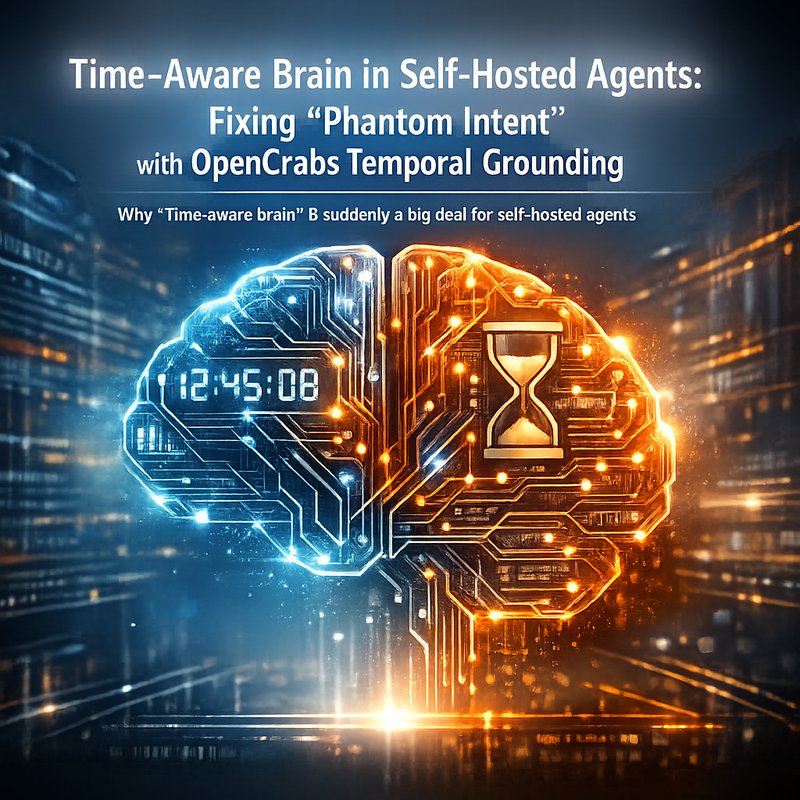
“Phantom Intent” Self-Heal: Scan All Languages at Once
Agents often use intent detection to decide what to do.
But if the language detection blocks you, or the intent phrase lists are wrong for one language, the agent can misunderstand the user’s message.
The OpenCrabs 2026 update includes:
- multilingual phantom self-heal now scans all languages at once
- word-level verbs stay language-gated to avoid false matches
- added missing forward-commitment shapes and filled use/write/run verb gaps across several languages
- brief work announcements like “Running checks now.” are treated as phantom intents correctly
This is subtle, but it reduces the “agent thinks it’s doing work when it’s not” behavior.
And it also prevents random short announcements from taking over the intent system.
Multi-Sentence “Checking CI Status” Then Do Real Work
This one is also practical.
Some agents announce progress like:
“Checking CI status.”
Then they continue with actual work.
But if the intent system thinks that announcement is the whole message, you can end up with early returns or missed tasks.
OpenCrabs 2026 changes include:
- the agent can announce work and then do real work in the same turn
- the check now returns early on announcements instead of flagging the turn as a phantom intent
So the agent does not get stuck in “announcement mode.”
What “Self-Healing” Really Means Here (Without the Hype)
A lot of AI projects say self-healing, but it often means nothing.
In OpenCrabs 2026, self-heal shows up as careful logic around:
- intent detection being wrong in multiple languages
- tool calls arriving in different wrappers
- restarts failing due to Linux binary path quirks
- Telegram giving partial edits
It is not mysticism.
It is fewer “agent breaks in edge cases” situations.
If you want a reliable agent, you need engineering around boring problems. That’s what this project seems to care about.
How You Can Use OpenCrabs 2026 for Real Agent Workflows
You might be wondering, “Cool, but where does this help me?”
Here are a few realistic ways people use self-hosted agents, and how OpenCrabs 2026 updates line up with those workflows.
1) Team Chat Agents That Don’t Double-Act
If you run an agent in shared Telegram groups, the bot might see edits and partial messages.
With the new settle-window behavior, the final user message matters more than the first frame.
That helps reduce:
- duplicate tasks
- accidental command triggers
- confusing results
If you coordinate daily ops or support workflows in chat, this update alone is a big win.
2) Model Switching Without Rewriting the Whole System
Teams often test different models.
One week you try one model for tool calling speed, next week you try another for quality.
OpenCrabs 2026 includes changes that improve tool call parsing and structuring for Xiaomi MiMo style outputs.
So you are less likely to end up in a “the agent is talking but never calling tools” dead end.
3) Long-Running Agents That Survive Updates
If you want an agent to run all day and get updates without downtime, Linux restart behavior matters.
The OpenCrabs 2026 restart fix reduces issues when the binary path changes during restart.
Not glamorous. Still huge.
How to Think About Reliability: Telegram, Tool Calls, Restarts
Let’s be honest. Most agent systems break in three places.
I’ll keep it simple.
Reliability Problem A: “The Message Isn’t Really the Message”
Telegram edits mean the bot can see a draft.
OpenCrabs 2026 addresses this by waiting for edit silence and holding messages until the final text settles.
Reliability Problem B: “The Agent Doesn’t Understand the Tool Format”
Tool calls vary by model vendor.
OpenCrabs 2026 adds parsing for XML wrappers and better structured tool_call handling.
Reliability Problem C: “Restart After Update Fails”
Self-updating agents must handle binary swaps, including Linux path weirdness.
OpenCrabs 2026 improves running binary path resolution so restarts are more stable.
If you’re building your own agent, these are the exact categories to test hard.
A Quick Setup Checklist for Trying OpenCrabs 2026
Since the repo focuses on self-hosting, you should approach testing like an operator, not a tourist.
Here’s a checklist that matches the kind of issues this update list shows.
Step 1: Start in a test environment
Run it where you can watch logs.
Don’t test in a live group until you verify:

- tool calls actually fire
- restart behavior works
- Telegram handling does not duplicate actions
Step 2: Test Telegram edits
Send a message, then quickly edit it.
You want to see the agent react once with the final text.
Step 3: Switch models (at least two formats)
If your stack includes model families that differ in tool call formatting, test tool calling right away.
If tools never get called, you’ll know fast.
Step 4: Verify onboarding with blank config
The updates mention config defaults seeding a Xiaomi section when no pre-existing config exists.
On fresh installs, this sort of default behavior prevents “it boots but tool calling is disabled” issues.
Where This Fits Into Today’s Agent Trends
Self-hosted agents are getting more realistic.
People want:
- less vendor lock-in
- more control over tools and execution
- better safety and better monitoring
- fewer surprises in production
OpenCrabs 2026 fits the trend of “agents that behave like services,” not “agents that behave like chat demos.”
Also, if you are already using other agent platforms, you might still value self-hosted reliability work because it changes what “agent success” looks like.
Not just clever answers. Correct actions.
Common Questions About OpenCrabs 2026
Is OpenCrabs 2026 only for Telegram?
No. Telegram handling is a big part of the recent updates, but the repository is broader than one channel. You should check the repo docs and fit it to your workflow.
Does “self-healing” mean it never fails?
No system never fails. The point is reducing known failure modes:
edit partials, tool call formatting, and restart path quirks.
Why do tool call formats matter so much?
Because “tool calling” is usually a structured step, not a text-only conversation. If the agent can’t parse the tool format, it cannot run actions.
OpenCrabs 2026 improves parsing so actions happen more often.
Bottom Line
OpenCrabs 2026 is a strong example of what agent engineering should look like in 2025 and beyond.
Instead of focusing only on flashy demos, it fixes the boring stuff that breaks agents in real use:
- Telegram edit handling that prevents acting on partial text
- restart correctness on Linux during update cycles
- tool call parsing and structured tool outputs for Xiaomi MiMo
- multilingual intent detection that reduces phantom intent traps
- multi-sentence work announcements that don’t block real tasks
If you want an agent you can actually run, the updates listed for OpenCrabs 2026 are exactly the kind of reliability work that pays off.
If you are curious, start at the repo and read the recent version notes first:
https://github.com/adolfousier/opencrabs
And if you’re also exploring agent tooling in your broader stack, you might like the general Neura ecosystem overview too: https://meetneura.ai/products
What to Try Next
Pick one failure mode from your own setup and test it hard:
- editing messages quickly (Telegram)
- switching models with tool calling
- restarting after updates
Then compare behavior before and after.
That’s how you’ll learn if OpenCrabs 2026 is worth adding to your workflow.