Qwen 3.7-Max-Preview: 1M Token Context Window Explained
Qwen 3.7‑Max‑Preview introduces a 1M token context window, enabling large‑scale text processing and smarter AI workflows.

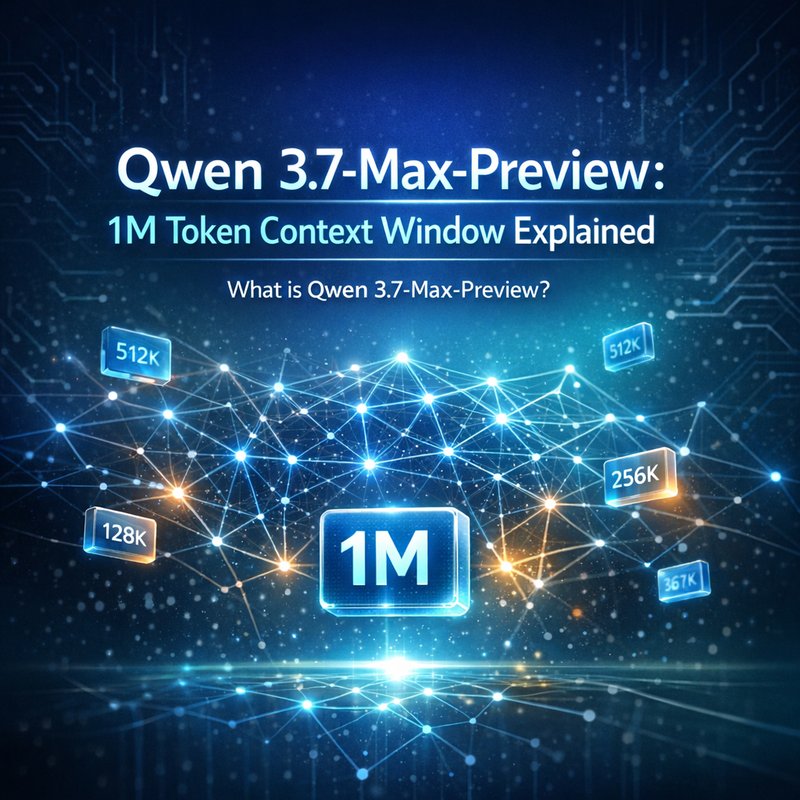
Qwen 3.7‑Max‑Preview introduces a 1M token context window, enabling large‑scale text processing and smarter AI workflows.
Long Context Models let AI handle much larger text windows. This guide explains SubQ, mobile Gemini, Claude Dreaming, benchmarks, and clear steps to adopt long memory.
NVIDIA OpenShell is a new open‑source runtime that lets developers mix GPT‑4, Claude, and local models on a single GPU or cluster. It offers a unified API, built‑in tool integration, and automatic GPU scheduling.
Self‑adapting LLMs let AI models update themselves in real time, offering faster updates, lower costs, and improved safety. MIT’s SEAL framework demonstrates a practical approach to self‑learning.
Kimi K2.5 is the first open‑weight AI model with 15 trillion tokens. It offers a hybrid architecture that balances speed and accuracy, making it ideal for content creation, code generation, and research.
GLM‑4.7 is the newest open‑source language model that scores 87.4 on the τ²‑Bench. It offers long‑running task support, stable tool calling, and a new architecture that keeps context intact. Learn how to use it for chatbots, data pipelines, and more.
Deepseek R1 is a powerful open‑source Chinese language model that offers strong performance and flexibility. This article covers its specs, benchmarks, use cases, and how to integrate it with Neura AI.