
DiffusionGemma 26B: How Parallel Text Diffusion Accelerates AI

Google DeepMind’s DiffusionGemma 26B uses parallel text diffusion to generate text faster and remember more context. This open‑source model can write up to 1,100 tokens per second and supports a 256 K token window.
DiffusionGemma 26B: How Parallel Text Diffusion Accelerates AI2026-06-11T22:28:13+00:00

LLM Self Training Guide

A step by step guide to llm self training that covers memory-first workflows, embeddings, safety checks, and tools like OpenCrabs and Neura ACE.

LLM Self Training Guide2026-06-02T05:34:57+00:00

Self Adapting LLMs

A clear guide on self adapting llms that explains how models learn at runtime, safety checks to add, and a step by step plan to run safe updates.

Self Adapting LLMs2026-05-31T05:35:12+00:00

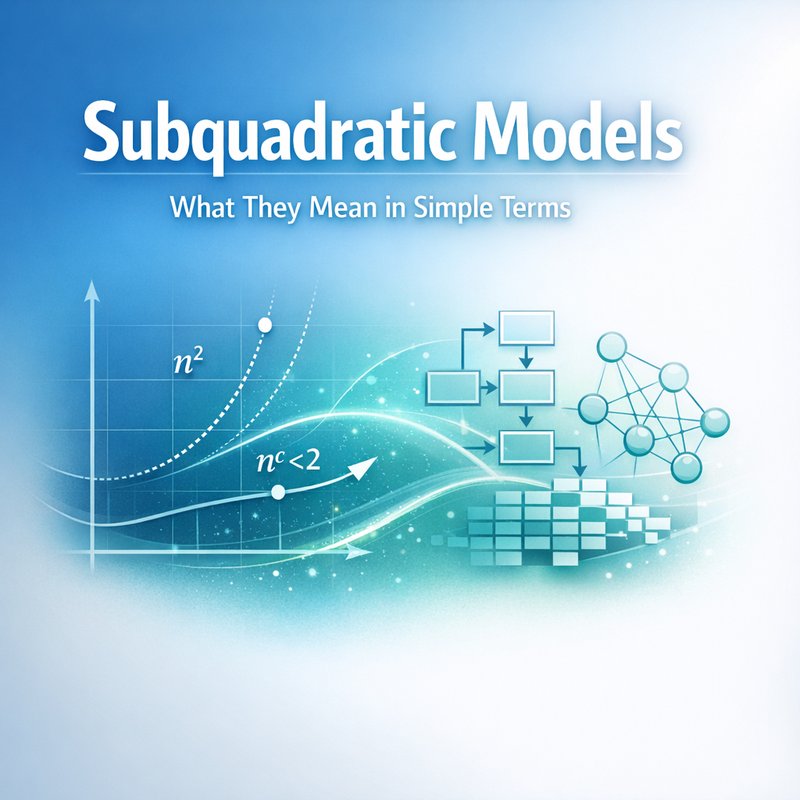
subquadratic models

A clear guide to subquadratic models, why they matter, and how to test and build systems that handle very long AI inputs.

subquadratic models2026-05-30T05:37:43+00:00

Fast‑Slow Training Explained

Fast‑Slow Training is a new training method that keeps AI models from forgetting old tasks while learning new ones. It uses slow weights for core knowledge and fast weights for quick adaptation.

Fast‑Slow Training Explained2026-05-23T05:34:46+00:00

Long Context Models

Long Context Models let AI handle much larger text windows. This guide explains SubQ, mobile Gemini, Claude Dreaming, benchmarks, and clear steps to adopt long memory.

Long Context Models2026-05-17T05:36:12+00:00

How SEAL Lets LLMs Learn on Their Own

MIT’s SEAL framework lets large language models generate their own training data and edit themselves, making AI systems more autonomous and cost‑effective.

How SEAL Lets LLMs Learn on Their Own2026-05-13T05:35:18+00:00

Self Adapting LLMs Explained

A simple, practical guide to Self Adapting LLMs, with examples, workflows, and safety checks for teams building smart apps.

Self Adapting LLMs Explained2026-05-12T05:36:27+00:00
Go to Top