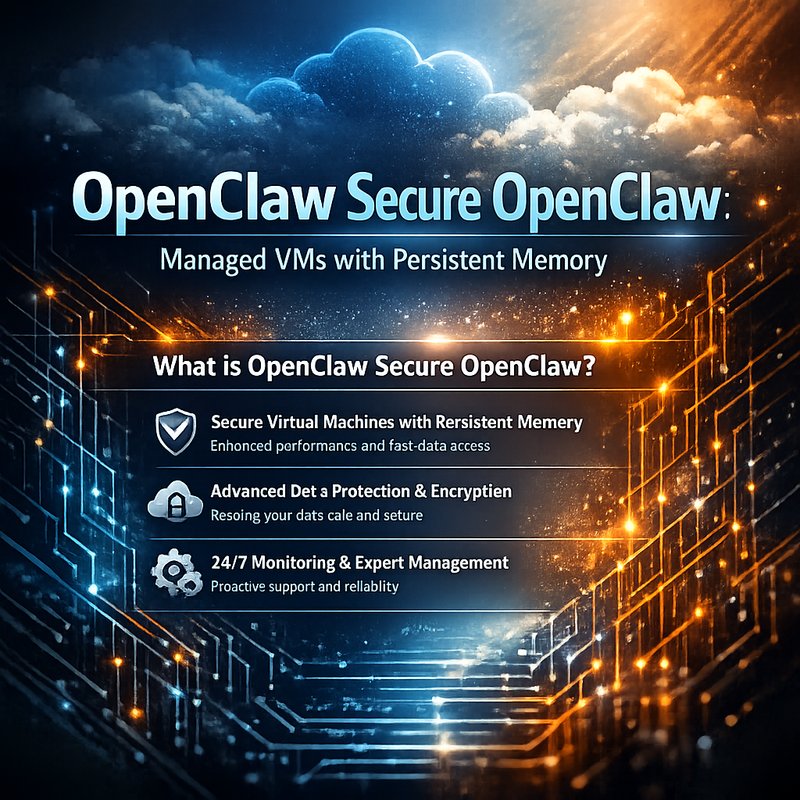
OpenClaw Secure OpenClaw is a new way to run AI agents in the cloud. It gives developers a managed virtual machine that keeps memory between sessions. This means an agent can remember what it did yesterday and use that knowledge today. The feature is built on top of OpenClaw’s existing agent framework, but it adds a layer of persistence that many teams have been asking for. In this article we’ll walk through what OpenClaw Secure OpenClaw is, why it matters, how it works, and how you can start using it today.
What is OpenClaw Secure OpenClaw?
OpenClaw Secure OpenClaw is a managed virtual machine service that runs OpenClaw agents. The key idea is that the VM keeps a long‑term memory store that survives restarts. Traditional stateless agents lose all context when the container stops. With persistent memory, the agent can pick up where it left off, which is especially useful for tasks that need continuity, like customer support or project management.
Key Features
- Managed VMs – You don’t need to set up your own infrastructure. The service handles scaling, networking, and security.
- Persistent Memory – Data is stored in a durable store that survives VM restarts or crashes.
- Easy Integration – OpenClaw agents can be deployed with a single command.
- Security – The service runs inside a sandbox and encrypts data at rest.
Why Persistent Memory Matters
When an AI agent runs in a container, it usually starts fresh each time. That means it has to re‑learn or re‑fetch data on every run. For many use cases, that is wasteful and slow. Persistent memory solves this by keeping a local cache of the agent’s knowledge. Think of it like a notebook that the agent can refer to whenever it needs to remember a user’s preferences or a project’s status.
Real‑World Example
Imagine a support bot that helps customers troubleshoot a software product. If the bot remembers that a user had a specific error last week, it can skip the basic questions and jump straight to advanced solutions. That saves time for both the user and the support team.
How Does OpenClaw Secure OpenClaw Work?
OpenClaw Secure OpenClaw runs on a managed VM that is provisioned by the OpenClaw platform. When you deploy an agent, the platform creates a VM, installs the OpenClaw runtime, and attaches a persistent memory store. The agent can read from and write to this store using simple API calls.
Step‑by‑Step Deployment
- Create an OpenClaw account – Sign up at OpenClaw.
- Write your agent code – Use the OpenClaw SDK to build your agent logic.
- Deploy – Run
openclaw deployand choose the “Secure OpenClaw” option. - Monitor – Use the OpenClaw dashboard to see logs and memory usage.
The deployment process is similar to other OpenClaw services, but the persistent memory option is highlighted in the UI.
Technical Deep Dive
Below we break down the main components that make persistent memory possible.
1. VM Provisioning
OpenClaw uses a cloud provider (AWS, GCP, or Azure) to spin up a VM. The VM runs a lightweight Linux distribution and has the OpenClaw runtime pre‑installed. The VM is automatically scaled based on traffic.
2. Memory Store
The memory store is a key‑value database that lives on a durable block storage device. It is encrypted at rest and can be backed up to object storage. The agent interacts with the store through a simple API:
memory.set("user:123:preferences", {"theme": "dark"})
prefs = memory.get("user:123:preferences")
3. Agent Runtime
The OpenClaw runtime is a lightweight process that runs your agent code. It has built‑in hooks for reading and writing to the memory store. The runtime also handles authentication, logging, and error handling.
4. Security Layer
All data in the memory store is encrypted with a key that is rotated every 90 days. The VM runs inside a secure enclave, and network traffic is encrypted with TLS. The platform also provides role‑based access control so you can limit who can read or write to the memory store.
Use Cases for Persistent Memory
OpenClaw Secure OpenClaw is useful in many scenarios. Below are a few examples that illustrate its value.
Customer Support Bots
- Context retention – The bot remembers past interactions.
- Personalized responses – Tailor answers based on user history.
- Reduced load – Fewer calls to external APIs.
Project Management Assistants
- Task tracking – Keep a record of tasks and deadlines.
- Status updates – Provide real‑time progress reports.
- Collaboration – Share memory across team members.
Knowledge Bases
- Dynamic FAQs – Update answers based on new data.
- Search optimization – Cache frequently accessed information.
- Offline mode – Serve content even when the network is down.
Getting Started with OpenClaw Secure OpenClaw
If you’re ready to try OpenClaw Secure OpenClaw, follow these steps:
- Sign up – Create an account at OpenClaw.
- Install the SDK – Run
pip install openclaw-sdk. - Create an agent – Use the template provided in the SDK.
- Deploy – Run
openclaw deploy --memory persistent. - Test – Interact with your agent and watch the memory persist.
You can also explore the OpenClaw documentation for advanced topics like scaling, monitoring, and security best practices.
Comparison with Other Managed Agent Platforms
Many platforms offer managed AI agents, but few provide persistent memory out of the box. Below is a quick comparison.
| Feature | OpenClaw Secure OpenClaw | Other Platforms |
|---|---|---|
| Managed VMs | Yes | Yes |
| Persistent Memory | Yes | No |
| Security | End‑to‑end encryption | Varies |
| Integration | OpenClaw SDK | Varies |
| Pricing | Pay‑as‑you‑go | Varies |
OpenClaw Secure OpenClaw stands out because it combines the convenience of managed VMs with the power of persistent memory. This makes it a strong choice for teams that need continuity in their AI workflows.
Common Questions

Q: Does persistent memory increase cost?
A: The cost is slightly higher because of the storage overhead, but the savings in reduced API calls and faster response times often offset the extra expense.
Q: Can I share memory between agents?
A: Yes, you can expose a shared namespace in the memory store and grant read/write access to multiple agents.
Q: Is the data compliant with GDPR?
A: The platform encrypts data at rest and in transit, and you can configure data residency to meet regulatory requirements.
Q: How do I back up my memory store?
A: The platform automatically backs up the store to object storage. You can also export the data manually via the API.
Future Roadmap
OpenClaw Secure OpenClaw is still in early stages, but the roadmap includes:
- Multi‑tenant memory isolation – Better isolation for shared environments.
- Advanced analytics – Built‑in dashboards for memory usage.
- Hybrid cloud support – Run agents across multiple cloud providers.
- AI‑driven memory pruning – Automatically remove stale data.
These features will make the platform even more powerful for developers and enterprises.
Conclusion
OpenClaw Secure OpenClaw gives developers a managed VM that keeps memory between sessions. This solves a common pain point for AI agents that need continuity. By combining managed infrastructure, persistent memory, and strong security, OpenClaw Secure OpenClaw is a compelling option for anyone building AI agents that require context retention. If you’re looking to build smarter, more reliable agents, give OpenClaw Secure OpenClaw a try today.