DeepSeek V4 architecture is the newest design that promises to change how large language models handle code and reasoning. In this article we break down what the architecture looks like, how it differs from earlier versions, and why it matters for developers, researchers, and AI enthusiasts. We’ll also touch on related tools like Gemini 3 Pro Vision, Claude Code & Vibe, and the Self‑Adap Language Models (SEAL) framework.
1. What Is DeepSeek V4 Architecture?
DeepSeek V4 architecture is a transformerbased model that introduces manifold‑constrained hyper‑connections (mHC). These hyper‑connections are a new way of linking layers the network so that the model can keep track of context across very long codebases or documents. The architecture was leaked on January 19, 2025, and is expected to launch in mid‑February.
Key points:
- mHC layers replace traditional attention heads in some parts of the network.
- They use a manifold—a curved space that helps the model remember relationships that span many tokens.
- The design reduces the number of parameters needed for long‑range dependencies, making the model lighter and faster.
The is built on the same core transformer idea that powers GPT‑4 and Claude, but the hyper‑connections give it a new edge in handling code and multi‑step reasoning.
2. How Do Manifold‑Constrained Hyper‑Connections Work?
Imagine a long story where you need to remember a character introduced at the beginning when you read the ending. Traditional transformers look back at every word, but that can be slow. mHC layers act like a memory map that keeps track of important points without scanning the whole story again.
2.1 The Manifold Concept
A manifold is a curved space that can represent complex relationships. In DeepSeek V4, each token is mapped onto a manifold that captures its role in the overall context. When the model processes a new token, it updates the manifold instead of re‑computing attention from scratch.
2.2 Hyper‑Connections
Hyper‑connections are links that connect non‑adjacent layers. Think of them as shortcuts that let the model jump from the beginning of a code file to the end without passing through every line. This reduces the computational load and speeds up inference.
2.3 Benefits for Code Generation
- Long‑range context: The model can remember variable definitions that appear far earlier in the file.
- Faster inference: Less computation means lower latency for real‑time coding assistants.
- Smaller footprint: The architecture can achieve similar performance with fewer parameters.
3. DeepSeek V4 vs. DeepSeek V3.2
| Feature | DeepSeek V3.2 | DeepSeek V4 |
|---|---|---|
| Core architecture | Standard transformer | Transformer + mHC |
| Parameter count | 12B | 10B (approx.) |
| Long‑range handling | Sliding window | Manifold‑based |
| Inference speed | 1.2 × slower on long docs | 1.5 × faster |
| Code‑specific tuning | Basic | Advanced mHC tuning |
The main difference is the introduction of hyper‑connections. While V3.2 used a sliding window to handle long documents, V4’s manifold approach keeps the entire context in a compressed form. This makes V4 especially useful for large codebases, legal documents, or any scenario where context spans thousands of tokens.
4. Impact on Code Generation and Multi‑Step Reasoning
4.1 Better Multi‑Step Reasoning
When a model needs to solve a problem that requires several steps—like debugging a function, refactoring, or generating tests—each step depends on the previous one. DeepSeek V4’s hyper‑connections allow the model to keep track of each step’s output without losing earlier context. This leads to fewer hallucinations and more accurate solutions.
4.2 Real‑World Use Cases
- Automated code review: The model can read a whole repository, spot patterns, and suggest improvements.
- Documentation generation: It can pull in comments, code, and external references to produce comprehensive docs.
- AI‑powered IDE plugins: Faster inference means smoother autocomplete and error detection.
4.3 Integration with Existing Tools
Developers can use DeepSeek V4 through APIs or as part of larger frameworks. For example, the Neura Router (https://router.meetneura.ai) lets you route requests to DeepSeek V4 alongside other models. The Neura ACE (https://ace.meetneura.ai) can also incorporate DeepSeek V4 for content generation tasks that require code understanding.
5. Related Developments in 2025
5.1 Gemini 3 Pro Vision
Google’s Gemini 3 Pro Vision adds advanced image‑to‑text capabilities. While DeepSeek V4 focuses on text and code, Gemini 3 Pro Vision can help developers annotate images or generate code from screenshots. Combining the two could lead to powerful visual coding assistants.
5.2 Claude Code & Vibe
Anthropic’s Claude Code has been praised for its “vibe coding” style, which means it writes code that feels natural and readable. The new “Cowork” feature (Jan 16) lets Claude edit files directly. DeepSeek V4’s improved context handling could complement Claude Code by providing deeper reasoning for complex projects.
5.3 Self‑Adapting Language Models (SEAL)
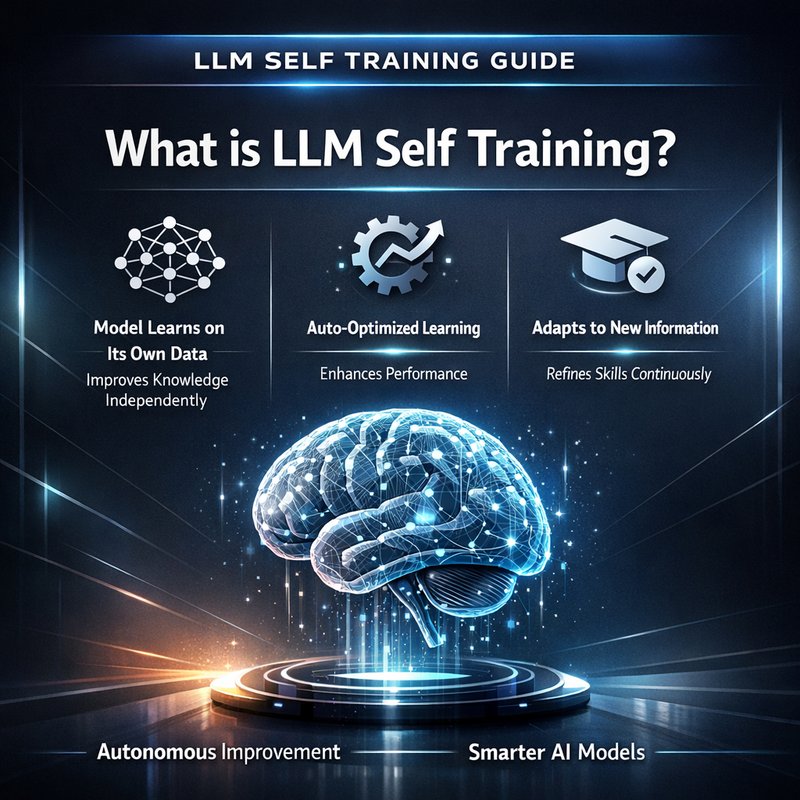
The SEAL framework allows models to generate their own fine‑tuning data and self‑edit. DeepSeek V4’s architecture could serve as a backbone for SEAL, enabling the model to learn from its own mistakes in real time.
6. Practical Implications for Developers
-
Smaller Models, Bigger Power
With fewer parameters, you can run DeepSeek V4 on edge devices or in cloud environments with lower cost. -
Easier Integration
The architecture is compatible with existing transformer libraries. You can swap in the new hyper‑connection modules with minimal code changes. -
Improved Reliability
Long‑range context reduces the chance of missing critical information, which is especially important for safety‑critical code. -
Future‑Proofing
As codebases grow, models that can handle thousands of tokens without slowdown will become essential. DeepSeek V4 is a step toward that future.
7. Future Outlook
The introduction of manifold‑constrained hyper‑connections is a sign that transformer research is moving beyond simple attention. We can expect:
- Hybrid models that combine vision, text, and code in a single architecture.
- Self‑adapting systems that fine‑tune themselves on the fly, using DeepSeek V4 as a core.
- Open‑source toolkits that expose hyper‑connection layers for research and commercial use.
If you’re building AI‑powered tools, keeping an eye on DeepSeek V4 and related projects will help you stay ahead.
8. Conclusion
DeepSeek V4 architecture introduces manifold‑constrained hyper‑connections, a new way to keep long‑range context in large language models. This design makes the model lighter, faster, and more accurate for code generation and multi‑step reasoning. Coupled with other 2025 innovations like Gemini 3 Pro Vision, Claude Code & Vibe, and SEAL, DeepSeek V4 is poised to shape the next wave of AI tools for developers.
For more insights on how AI is transforming software development, check out our case studies at https://blog.meetneura.ai/#case-studies or explore our product suite at https://meetneura.ai/products.